

Home » What is an Aparthotel
Published 10 November 2026 · 6 min read
Key Takeaways:
An aparthotel sits somewhere between a traditional hotel and a rental apartment. Guests typically have their own furnished accommodation, often with a kitchen or kitchenette and living space, alongside services or facilities such as housekeeping, reception, laundry, gyms or communal areas.
While aparthotels have traditionally been associated with business travel and shorter stays, they can also be a practical option for longer-term living, including stays of 12 months or more. In London, they can offer an alternative to traditional renting by combining furnished accommodation, simpler monthly costs and professional management without the same level of household setup.
An aparthotel is a type of accommodation that combines elements of an apartment with the services and management of a hotel. Accommodation is typically fully furnished and can include a kitchen or kitchenette, private bathroom and living space, while the wider building usually offers facilities such as reception, housekeeping, laundry, gyms, coworking areas and communal spaces.
Unlike a traditional hotel, an aparthotel is generally set up to give guests more independence and make longer stays practical. Depending on the property, stays can range from a few nights to many months or even a year or more, making some aparthotels a genuine alternative to renting a conventional apartment.
In England, aparthotel is not a separate planning use class. Some aparthotels operate within Use Class C1, which covers hotels and similar accommodation, but the planning classification depends on how the property is actually operated, managed and occupied rather than simply what it is called.
For longer stays, an aparthotel can work much more like a home than a conventional hotel. Accommodation is usually fully furnished, with cooking facilities, a private bathroom and space to live as well as sleep. Many properties also include services such as Wi-Fi, utilities, housekeeping and access to shared amenities within the monthly price.
That can make aparthotels particularly convenient for people who want to move in without furnishing a property or setting up separate household accounts. Depending on the operator, longer stays may run for several months, 12 months or more, with the exact terms, pricing and services varying between properties.
The main difference from traditional renting is that the accommodation is professionally operated as hospitality rather than simply being let as a residential apartment. For residents, the practical benefit is often a more straightforward setup, with fewer separate arrangements to manage and more services included as part of the stay.
For longer stays, the difference between an aparthotel and a traditional rental apartment can be smaller than you might expect. Both provide private accommodation suitable for day-to-day living, but the way they are furnished, managed and paid for is often quite different.
An aparthotel can remove much of the setup involved with renting by providing furnished accommodation, a single monthly price inclusive of utilities, and professional on-site management. A traditional rental may offer more freedom to personalise your home and a more conventional residential arrangement.
| Feature | Aparthotel | Traditional Rental Apartment |
|---|---|---|
| Furnishings | Typically fully furnished and ready to move into | Can be furnished, part-furnished or unfurnished |
| Household bills | Often bundled into one monthly price | Usually arranged and paid separately |
| Wi-Fi | Frequently included | Usually arranged by the tenant |
| Kitchen facilities | Typically includes a kitchen or kitchenette | Full kitchen normally provided |
| Shared amenities | May include gyms, lounges, coworking or other shared spaces | Depends on the building or development |
| Management | Professionally managed as part of the accommodation service | Managed by a landlord, agent or professional operator |
| Housekeeping | May be included or available as a service | Normally the resident’s responsibility |
| Move-in setup | Usually minimal, with most essentials already arranged | May require utilities, Wi-Fi, furniture and other accounts to be organised |
| Personalisation | Usually more limited | Generally greater scope to make the property feel like your own |
| Occupancy arrangement | Terms vary and may use a licence or hotel-style agreement rather than a tenancy | Usually occupied under a residential tenancy agreement |
Neither option is automatically better. For someone who wants a furnished home with fewer household accounts to organise and amenities included within the building, an aparthotel can be particularly appealing. Someone who prioritises a conventional tenancy, greater personalisation or managing their own household arrangements may prefer a traditional rental.
For longer stays, aparthotels can offer a great middle ground between hotel accommodation and a traditional rental. The main advantages usually come down to convenience, simplicity and access to services, while the trade-offs are often around cost, personalisation and the type of occupancy agreement.
Move-in ready accommodation: Aparthotels are typically fully furnished, reducing the need to buy furniture or organise a property from scratch.
Simpler monthly costs: Utilities, Wi-Fi and other household costs are often included within one monthly price.
Professional management: Maintenance, building management and guest services are handled by a dedicated operator.
Shared amenities: Depending on the property, residents may have access to gyms, coworking spaces, lounges, laundry facilities and other communal areas.
Useful for relocation: Aparthotels can suit people moving to a new city or country who want somewhere ready to live in immediately.
Potentially more flexibility: Some operators offer a wider range of stay lengths than a conventional residential tenancy.
Higher headline price: The monthly cost can be higher than some traditional rentals because furnishings, bills, services and amenities are included, but this can work out cheaper overall.
Less personalisation: Furnished accommodation generally gives residents less freedom to change furniture, decorate or make substantial alterations.
Not every service is included: Parking, housekeeping or other additional services may carry separate charges.
Facilities vary between properties: The level of space, kitchen facilities, amenities and services can differ significantly from one aparthotel to another.
The best comparison is therefore not simply the advertised monthly price. It is the total cost, convenience and level of service you receive compared with setting up and running a traditional rental yourself.
The main difference between an aparthotel and a traditional hotel is that an aparthotel is generally better equipped for longer term living. Rooms typically include kitchen facilities and more living space, while longer-stay pricing, laundry facilities and less frequent housekeeping are also common.
Traditional hotels tend to be geared more towards shorter stays, with services such as daily housekeeping, restaurants, room service and reception forming a larger part of the experience. Aparthotels usually place more emphasis on independence, giving residents the ability to cook, work and settle into a routine while still benefiting from professional management and shared facilities.
For a short trip, a conventional hotel may be the simpler choice. For someone staying for several months or looking for a longer-term home, the additional space, facilities and independence of an aparthotel can make it a more practical option.
Long-stay aparthotels can suit a wide range of people, but they are particularly useful for those who value convenience, flexibility and a move-in ready home.
They can be especially appealing to:
Professionals relocating for work: particularly those moving to London who want somewhere furnished and ready to live in immediately.
International arrivals: an aparthotel can simplify the first few months in a new city by reducing the need to arrange furniture, utilities and Wi-Fi separately.
People between homes: useful for those who have sold a property, are waiting for a purchase to complete or need temporary accommodation during a move.
Project workers and contractors: especially where work assignments run for several months or longer.
Renters who value amenities: some aparthotels include gyms, coworking spaces, lounges, laundry facilities and other shared spaces within the building.
People who prefer simpler monthly budgeting: having accommodation, utilities and other services bundled together can make household costs easier to manage.
Aparthotels will not suit everyone, particularly people who want maximum freedom to personalise their home or who specifically prefer a traditional tenancy. For the right resident, however, they can offer a practical alternative to conventional renting without feeling like short-term hotel accommodation.
London is a natural market for longer-stay aparthotels because many residents arrive needing somewhere ready to live in without immediately setting up a traditional rental. This can be particularly useful for people relocating for work, moving from overseas, starting a new role or living in the city for a fixed period.
The model can also make day-to-day costs easier to manage. Furnishings, Wi-Fi, utilities and other services may be included within one monthly price, while shared amenities such as gyms, coworking spaces and lounges can add further value. For some residents, that simplicity can be more appealing than arranging a conventional rental and setting up each household service separately.
Aparthotels are also increasingly present outside Central London. Well-connected areas with fast rail links can offer access to the city while providing more choice for people who do not need to live in Zone 1.
Croydon is a good example of how the aparthotel model can work for longer-term London living. East Croydon offers fast connections to London Bridge, Victoria and Gatwick Airport, while the surrounding area has seen significant growth in newer rental accommodation, amenities and professionally managed buildings.
The Canopy, Croydon is a new aparthotel close to East Croydon station offering fully furnished rooms, all-inclusive monthly pricing and shared amenities including a gym, coworking spaces, lounges and dining areas. It is designed for longer stays as well as a smaller number of short stays.
You can explore The Canopy for more information, or read our Croydon Area Guide to learn more about living in the area.
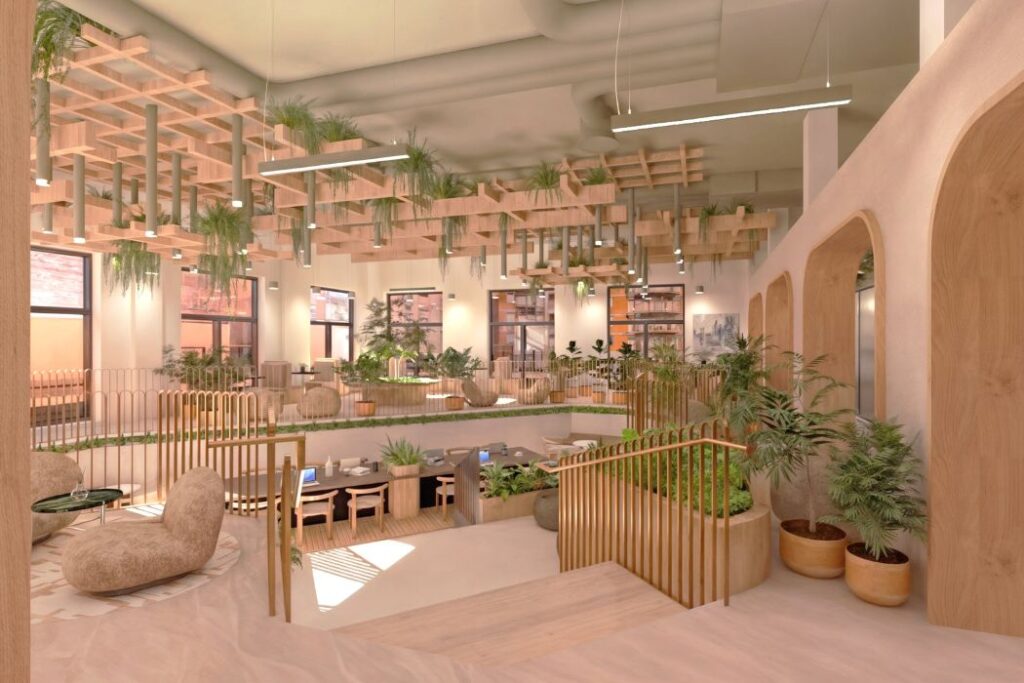
The Canopy in Croydon offers fully furnished rooms, all-inclusive monthly pricing and extensive shared amenities, just a few minutes from East Croydon station.
Register your interest today to get first access to room details, launch pricing and booking information.