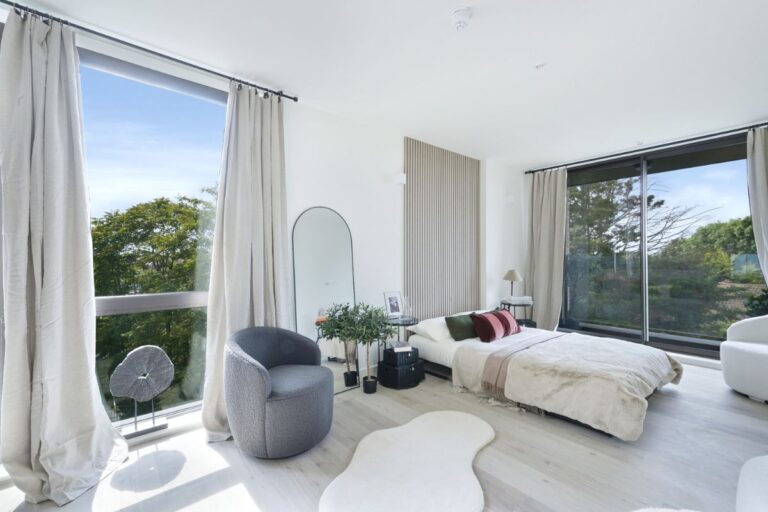
Co-living has become a popular renting option in London and across major UK cities, appealing to people who want a simpler setup and a more social way of living. It typically combines a private room or studio with high-quality shared spaces, on-site management, and a monthly rent that often includes bills and Wi-Fi.
If you are considering co-living, the key thing to understand is that it is not just a flat share. Leading co-living buildings are purpose-designed and professionally managed. This can make co-living easier to move into and easier to live in than a traditional house share.
The co-living sector has grown rapidly in London, with several large purpose-built developments opening across the city as demand for flexible, professionally managed rental options increases. This guide explains what co-living really means, how it works in practice, the benefits and drawbacks, and how to decide whether it’s the right choice for you.
Co-living is a professionally managed rental model that combines private living space with shared communal amenities. Residents usually rent a studio apartment, while having access to shared amenities such as lounges, co-working areas, gyms, and social spaces within the building.
One of the core principles of co-living is simplicity. Instead of having to arrange the rent, utilities, internet and maintenance separately, most co-living developments offer a single monthly payment that covers everything. This removes a potential point of friction in traditional house shares or privately rented flats.
Unlike house shares, co-living buildings are purpose-built for shared living and usually run by a single, professional management team. This means clear communication, consistent standards and well designed amenities.
In short, co-living sits somewhere between a traditional house share and modern build-to-rent living. It offers more structure and support than renting a room in a shared house, while prioritising community and convenience over maximising private floor space.
While co-living is not a one-size-fits-all model, what most people are referring to today, especially when searching for ‘what is co-living’, is large, purpose-built co-living developments. These now define the sector across London and other major UK cities.
Large, purpose-built co-living developments, such as The Rex and those by Dandi, typically feature private studio apartments or en-suite rooms, alongside a wide range of high-quality communal amenities within the building.
These schemes are professionally managed and often include resident lounges, co-working spaces, gyms, social areas, and organised events. Rent is usually charged as a single monthly payment that covers utilities, internet, and building management, helping to simplify the renting experience.
Smaller co-living homes also exist, typically within converted houses or low-rise buildings. These tend to operate more like a managed house share, with residents renting private bedrooms and sharing kitchens and living spaces with a smaller group of people.
While this model still falls under the broader co-living umbrella, it offers a more limited amenity experience compared to purpose-built developments. As a result, when people refer to co-living today, they are usually describing the larger, professionally managed buildings designed specifically for shared living.
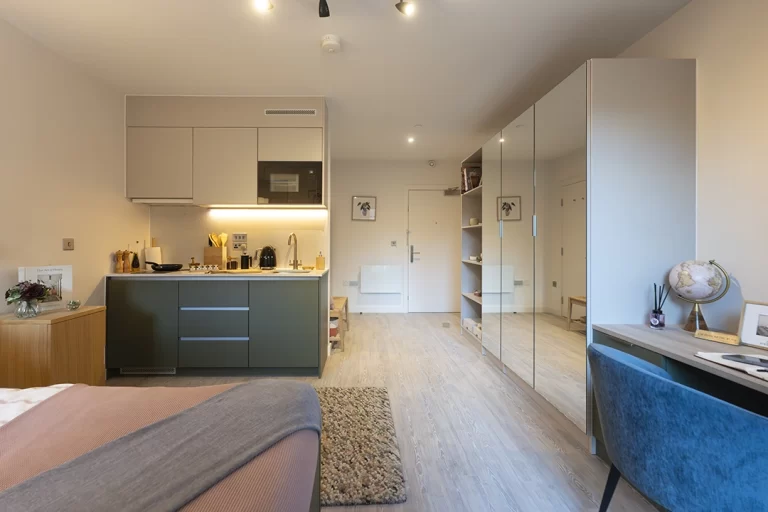
Co-living is designed to simplify renting and reduce the admin that often comes with shared accommodation. While each building operates slightly differently, most co-living developments offer these characteristics:
Many of London’s modern co-living developments are professionally managed communities designed around convenience, flexibility and shared amenities. If you want to explore current options, you can browse available co-living developments in London.
When comparing co-living vs a flat share, the biggest differences often come down to convenience, management, and access to amenities. Co-living typically offers an all-inclusive monthly rent, professional on-site management, and purpose-designed amenities such as co-working areas, lounges and gyms.
A traditional flat share often involves shared responsibility for bills, cleaning, and maintenance, with standards varying depending on landlords and housemates. For renters who value simplicity, consistent management, and access to high-quality shared amenities as part of their rent, co-living can present a more desirable alternative.

While there are clear benefits to co-living, like convenience, structure and amenities, it is not the right option for everyone. Like any rental option, it has potential drawbacks that should be considered before making a decision. These include:
Co-living is popular with people relocating for work or study, as well as renters who want a more social environment without the responsibilities that come with a traditional flat share. It can suit anyone who values the simplicity of having all bills included, professional on-site management, and access to shared amenities.
However, renters who prioritise larger private living areas or prefer a more traditional home setup may find other rental options more suitable.
If you’ve decided that co-living might be the right option for you, speaking with a specialist who works closely with co-living operators can provide you with the clearest picture of what’s available, and help you to find the right option for you.
At Right Now Residential, and Right Now Living, we specialise in partnerships with the UK’s leading co-living providers. This allows us to give renters access to the latest availability in current and upcoming co-living developments and guidance on which schemes best match their lifestyle and budget.
Things to look out for in a co-living development include:
So, what is co-living in practice? At its core, co-living is a professionally managed way of renting that combines private living space with shared amenities, flexible contracts, and all-inclusive pricing. For renters who value convenience, managed living, and access to communal spaces, co-living can offer a compelling alternative to traditional flat shares and private rentals.
If you’re exploring co-living options and want guidance tailored to your needs, the team at Right Now Residential can help. By working closely with a range of co-living operators across London and the UK, we can provide up-to-date availability, practical advice, and support throughout your search, helping you find a home that fits how you want to live.
Speak with a co-living specialist to understand which developments best match your lifestyle and budget.
Simply fill out the form, or for immediate assistance call +44 (0) 203 002 2650
Co-living is a professionally managed rental model where residents rent a private room or studio while sharing communal amenities such as lounges, kitchens, and co-working spaces. Most co-living developments offer all-inclusive rent covering utilities, Wi-Fi, and building management, making the renting experience simpler and more flexible than traditional housing options.
In most co-living developments, residents rent a private room or studio apartment within a larger building designed for shared living. Rent is typically paid as a single monthly payment that includes utilities, Wi-Fi, and access to communal amenities such as lounges, gyms, and co-working spaces. Many buildings also offer flexible tenancy lengths and on-site management.
The main advantages of co-living include all-inclusive rent, flexible contracts, professional management, and access to shared amenities and social spaces. However, co-living can also involve smaller private living areas and building rules that may not suit renters who prefer more independence or personalisation.
Yes. While both involve shared living, co-living developments are usually purpose-built and professionally managed. Residents typically have a private studio or en-suite room while sharing high-quality communal spaces. In a traditional house share, tenants usually rent rooms within a privately owned property and share responsibility for bills, maintenance, and house management.
Co-living and build-to-rent developments are both professionally managed rental communities, but they are designed for different living styles. Co-living prioritises shared amenities and smaller private spaces, while build-to-rent developments typically offer fully self-contained apartments with larger private living areas.
to save your favourite homes and more
Enter your email address and we will send you a link to change your password.